

For Assistance Call - (904) 297-4052


-
-The Mercy Network
-
-Mercy Care Advocates
-
-Mercy Resource Referral Center
-
- Mercy College
-
- Mercy Group Homes
-
- Mercy Community Action Teams
For Assistance Call - (904) 297-4052
History of Mercy Support Services
Networking Begins in Clay County
2003 - Cat Bowden, community outreach leader at Pinewood Presbyterian Church in Middleburg, Florida, began meeting on a monthly basis with other leaders in Clay County whose churches or organizations offered assistance to people in need.
This monthly meeting grew to involve more than 50 agencies; each sending representatives to share programs and resources, avoid duplication and plan Countywide Outreaches to homeless, disadvantaged and low income people in Clay County. This meeting was called The Mercy Network.
Services For Displaced Families
2010 - Early in 2010, after hearing repeated pleas for services for homeless families in Clay County, leaders of The Mercy Network decided to step out in faith to make provision for them. They began raising funds from local churches and compassionate hearted individuals to accommodate homeless families in local hotels.
2011 - In March 2011, after noticing that hotel expenses were running too high, The Mercy Network leaders asked local churches to increase their contributions for the purpose of renting group homes to accommodate the homeless families. The resulting growth to the organization created the need to reorganize and establish a 501(c)(3) nonprofit organization.
Experienced Leadership
At this time, news reached the leaders of The Mercy Network that Patrick Hayle, CEO of the Jacksonville City Rescue Mission, had retired,. Mr. Hayle was approached about joining the organization and accepted an invitation to become the Board Chairman. Mercy Support Services was subsequently born as a result of leadership’s realization that they were offering so much more than a network.
Resource Referral Call Center
2012 - Following a monthly network meeting, one of Mercy Support Service’s leaders was told by the Community Liaison for Orange Park Medical Center that Orange Park Medical Center had empty offices in Fleming Island, where the lease was paid up for 2 more years. The Orange Park Medical Center CEO was approached shortly thereafter and asked to donate the office space to Mercy Support Services. He graciously agreed.
Early in 2012, the offices opened as a Resource Referral Center. A Countywide toll-free number was made available to any person in crisis who wanted to access Clay County resources to guide them to self-sufficiency.
Late in 2012 - Patrick Hayle accepted the nomination as President/CEO of Mercy Support Services. The 501(c)(3) application was approved and Mercy Support Services began spurning additional services to help people in crisis become self-sufficient: These services include Mercy Group Homes, the Mercy Resource Referral Center, Mercy Care Advocates, Mercy College and the Mercy Community Action Teams.
Mercy Care Mentors
Due to the stress that a person in crisis is under, Mercy Support Services trains volunteers to be their advocates and to help access resources on their behalf. The trained Mercy Care Advocates also oversee case plans, which professional case managers have compiled to help clients become self-sufficient. Mercy Care Mentor Training is done bi-monthly at the offices of Mercy Support Services.
Mercy College
2013 - Clients under case management and those being accommodated in the Mercy Group Homes are required to attend Mercy College if they aren’t working or going to school. At Mercy College, clients are taught financial management, life skills, wellness improvement, computer skills, parenting and religious instruction. Time is also set aside for clients to search for jobs and update their resumés.
Mercy Community Actions Teams (MCATS)
When the Clay County Emergency Management directors heard about the extensive and cohesive networking achievements by Mercy Support Services, they invited Mercy Support Services to be the Emergency Support Function 15 (ESF 15) for Clay County. The ESF 15 coordinates incoming donations and the volunteers who step forward in times of disaster. The ESF 15 coordinates these resources to help the disaster victims on the path to long- term recovery. In order to keep teams of volunteers who are ready to deploy in times of disaster motivated, Mercy Support Services creates opportunities for these teams to serve in ‘blue sky,’ times by doing projects in the community. Examples of community projects are: doing yard work for shut-ins, maintenance for single parents, minor repairs for low income and the elderly, etc.





2011 - Supportive Homes for Displaced Families
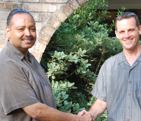
2011 - Patrick Hayle, (L) Former CEO of City Rescue Mission Joins
Resource Referral Call Center - Phase 1
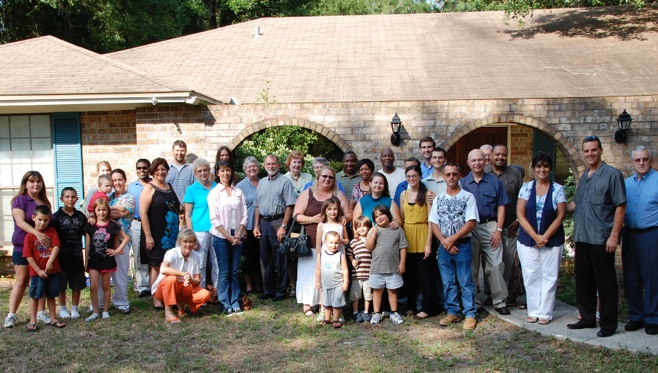
The opening of group homes demonstrates the power of what a strong, well developed network can accomplish. The people above, from different churches and agencies, came together and gave of their time, talents and treasures to achieve the common goal of bringing homeless families to self-sufficiency.

2004 to Present -Monthly Network Meetings


Mercy Care Advocates - Phase 2
Mercy College
Mercy Community Action Teams (MCATS)